First off, I’ll start with an admission – I’m crazy about Google and Wikipedia. image courtesy of Google.com

Some guys read up on cars. Some people collect stamps or taste wines and cheeses like their lives depend on it; I’m a Google/Wiki geek.
What makes me crazy about them is what has made them so popular, community and interface. They’re really easy to use, and there are a ton of people using them.
Google allows people across the world to chat on Google Groups, and its multi-media perspective (Google Video, Gmail, Google Desktop, Blogger) is awesomely easy. A single account connects you to everything.
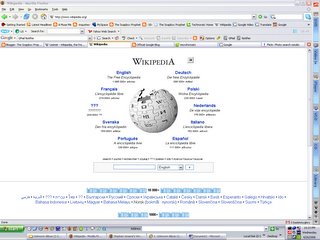
Wikipedia takes it one step further though with opensource technology. True, there’s specific entries that are guarded with gatekeepers, but most everything else is open. That’s a good thing.
Long intro – I know, and not journalistically sound.
Anyways. So what?
Well, I was perusing the SJSU website today, trying to find out when people are coming to give guest lectures so I could podcast them (my digital voice recorder is in the mail, Ryan), when I realized that I not only had to go to SJSU’s website, I had to go to the library’s website.
That’s right, the library which is located on San Jose State’s campus!
Well, the lazy computer geek in me instantly rejected the notion that I should have to go two places to find everything I need. I mean, this is the information age, so why aren’t we using it. I’m lazy for Pete’s sake!
Enter Google Calendar.
Google Calendar would allow the University to post all events occurring on campus and in the library in one convenient place where students could check.
A general password and username could be given to students, and (enter Wikipedia’s concept) even students could post events of importance to them. Frats, clubs, sports, theatre – all of which are disconnected, could suddenly be connected and opensourced.
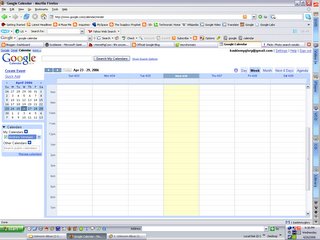
Pretty cool concept.
Then, Gmail could send students reminders about upcoming events, give notes/prices/times, and links to Google Groups that are talking about it.
Friends, classmates, and random strangers would suddenly have the advantage of knowing what is going on.
Lastly, a simply set of links could be placed on the frontpage of the SJSU website – one to Google Calendar, and one to each of the other free Google products they might want to download.
ie.Gmail Notifier – to allow students to have reminders emailed to them.
ie.Google Video – in case they want to post vids of events and later post link in Google Groups.
ie.Google Talk– to call friends they meet on Google Groups.
ie.Google Groups – to they can bla bla bla bla all they want on Usenet.
Isn’t this where technology and business are going anyway? It seems a waste of programming and students’ time not to integrate these systems.
What’do you think?
sjsusoapbox propheteducationtechnologyryan sholinopen source